Deck Construction Guide
Building a deck is one of the most common residential construction projects in the United States. However, despite its popularity, it is also one of the most frequently built incorrectly.
A deck is not just an outdoor platform. It is a load-bearing structural system that must safely support loads, resist environmental conditions, and comply with building codes.
According to the International Residential Code, decks are primarily regulated under Section R507, with additional requirements across structural, safety, and material provisions.
This guide explains deck construction from a professional perspective, including structural components, materials, step-by-step execution, regional considerations, and the most critical mistakes to avoid.
What Is a Deck (Structural and Code Perspective)
Under the International Residential Code:
- Decks fall under Section R507 – Exterior Decks
- Structural loads are defined under Section R301
Decks must be designed to support:
- Minimum 40 psf live load (R301.5)
- Dead loads (materials and framing)
- Environmental loads
Unlike interior floors, decks are fully exposed to weather, making durability, drainage, and moisture protection critical.
Footings
Footings transfer all loads into the soil. They must be installed on stable ground and sized correctly to prevent settlement (IRC R403.1 and R507.3).
Posts
Posts act as vertical supports, transferring loads from beams to footings (IRC R507.4).
Beams
Beams distribute loads from joists to posts. Proper sizing per Table R507.5 is essential.
Joists
Joists form the structural grid and must follow spacing rules under IRC R507.6.
Ledger Board
The most critical connection. Must attach to a structural rim joist — never to cantilevers (IRC R507.9).
Decking
Surface boards that must allow drainage and expansion (IRC R507.7).
Railings and Stairs
Safety components required under IRC R312 and R311.7.
Step-by-Step Deck Construction (Professional Breakdown)
-
Step 1: Planning and Design
Define layout, loads, and whether the deck is attached or freestanding. This stage controls the entire structural behavior.
-
Step 2: Permits and Code Compliance
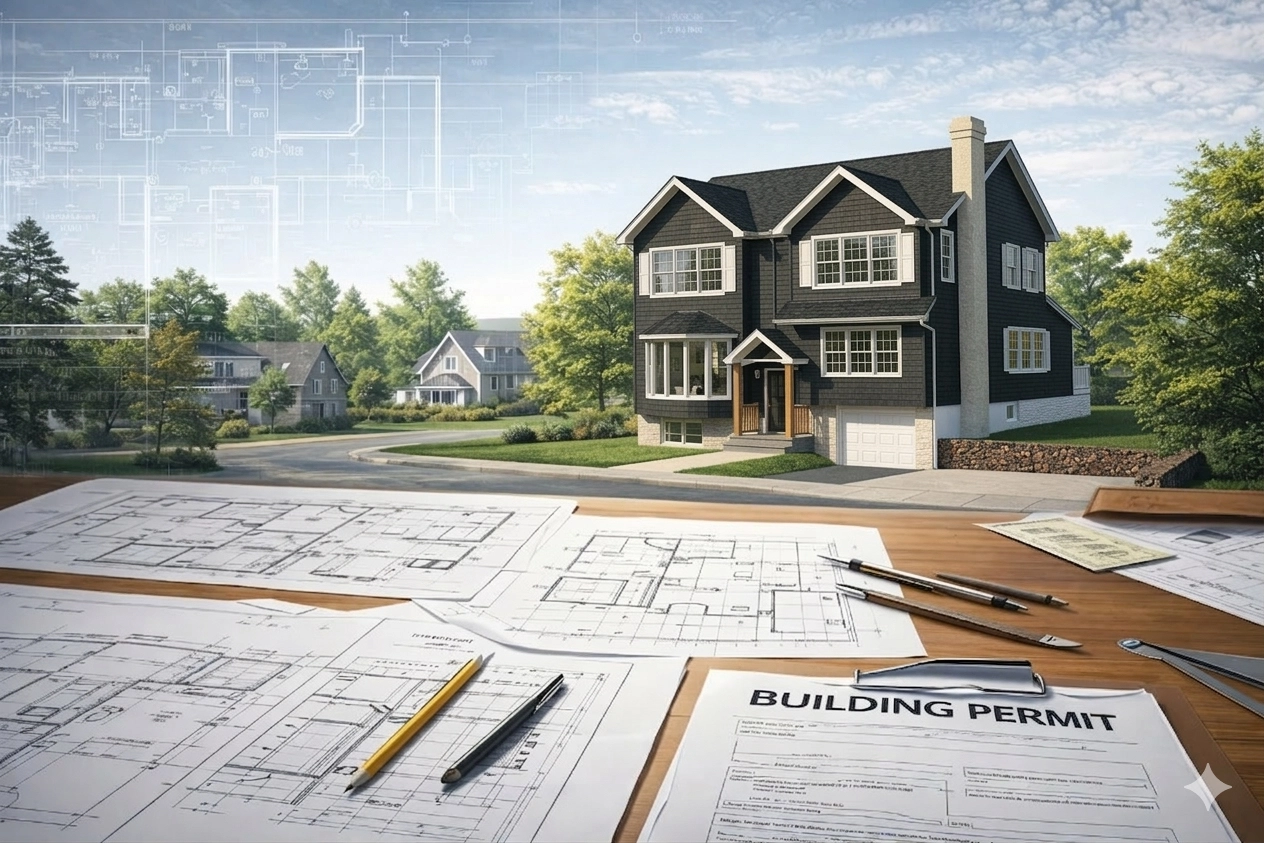
Most decks require permits under IRC R105. Local approval ensures the design meets safety standards.
-
Step 3: Layout and Footing Placement
Precise layout ensures proper load distribution and alignment (IRC R507.3).
-
Step 4: Install Footings
Must reach stable soil and proper depth (IRC R403.1).
-
Step 5: Install Posts and Beams
Creates the primary load path. Improper installation leads to structural failure.
-
Step 6: Install Ledger Board
Critical step. Must be properly fastened and flashed (IRC R507.9).
-
Step 7: Install Joists
Spacing and spans must follow IRC R507.6 to prevent deflection.
-
Step 8: Install Decking Boards
Ensure spacing for drainage and expansion.
-
Step 9: Install Railings and Stairs
Required for safety compliance.
-
Step 10: Final Inspection and Approval
Inspections verify compliance (IRC R109).
In regions like Massachusetts, foundation design is one of the most critical aspects of deck construction.
Soil Conditions
Massachusetts soils vary significantly:
- Rocky soil → difficult excavation
- Clay soil → expansion and movement
- Wetland areas → environmental restrictions
Typical bearing capacity:
- 2,000 to 4,000 psf
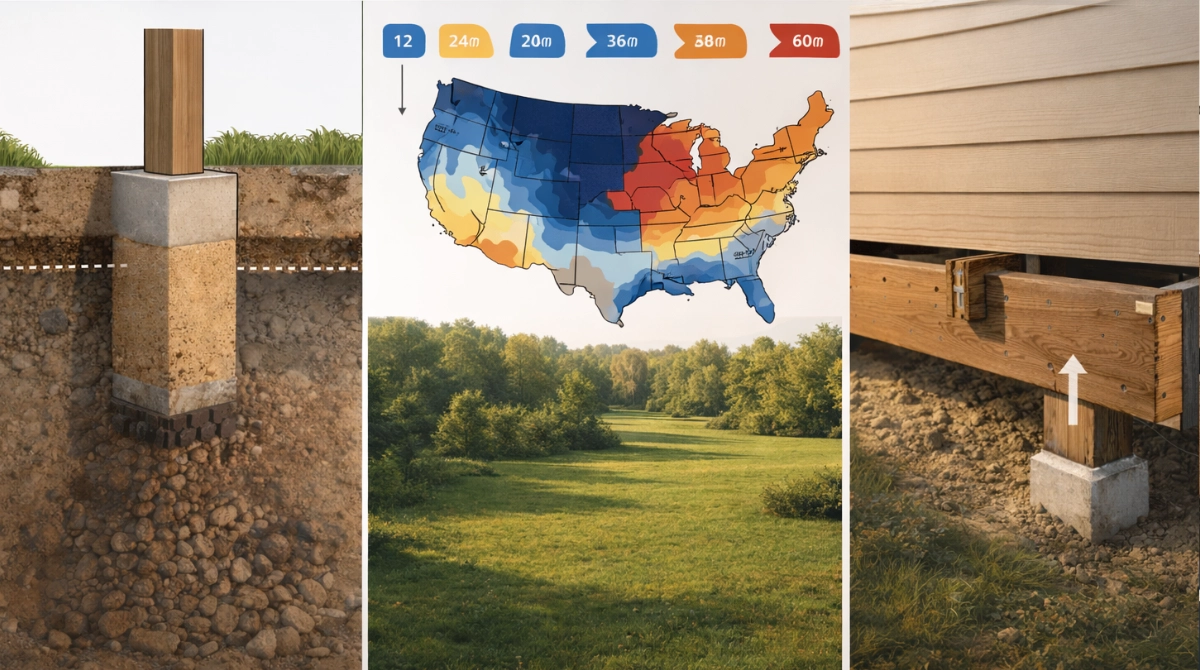
Typical frost depth:
- Around 48 inches (4 feet)
If footings are above this depth, frost heave can lift the structure and cause failure.
This requirement is defined under IRC R403.1.4.
Types of Deck Foundations
Concrete Footings
- Most common system
- Requires excavation
- Must go below frost line
- Larger base area
- Better load distribution
- Ideal for heavier structures
Helical Piles
- No excavation
- Fast installation
- Ideal for difficult soils or wetlands
When Engineering Is Required
Engineering is typically required when:
- Deck is elevated
- Attached to structure
- Soil conditions are unknown
- Additional loads exist
Most Common Deck Construction Mistakes
-
Improper Ledger Connection
Violates IRC R507.9 and is the #1 cause of deck collapse.
-
Inadequate Footings
Leads to settlement and structural movement.
-
Incorrect Joist Spacing
Causes deflection and weak structure.
-
Missing Lateral Load Connection
Violates IRC R507.9.2.
-
Incorrect Fasteners
Leads to corrosion (IRC R317.3).
Materials and Code Considerations
-
Pressure-Treated Wood
Required for durability (IRC R317).
-
Fasteners
Must be corrosion-resistant (IRC R317.3).
-
Composite Decking
Must comply with manufacturer specs and IRC R507.7.
Do You Need a Permit?
Most decks require permits under IRC R105, especially when:
- Attached to the house
- Elevated
- Structural
Need Help Designing a Code-Compliant Deck?
A properly designed deck starts with accurate and code-compliant drawings.
EAD Drafting Services supports deck construction plans, IRC-compliant layouts, permit-ready drawings, and 3D visualization.
Starting with the right plans helps avoid delays, failed inspections, and costly mistakes.
FAQ
What load must a deck support?
Minimum 40 psf live load (IRC R301.5).
Can a ledger be attached to a cantilever?
No (IRC R507.9)
When are guardrails required?
Above 30 inches (IRC R312.1).
What is the biggest cause of deck failure?
Improper ledger connection.
Conclusion
Deck construction is governed by strict structural requirements under the International Residential Code.
Following these standards ensures:
- structural safety
- durability
- successful inspections
A deck is not just an outdoor feature — it is a structural system that must be built correctly.